
A Class That Takes a Closer Look at Hope
A Leadership and Character-led course helps students explore how hope and imagination can help make the world a better place.
By Sydney Bowman | September 28, 2026
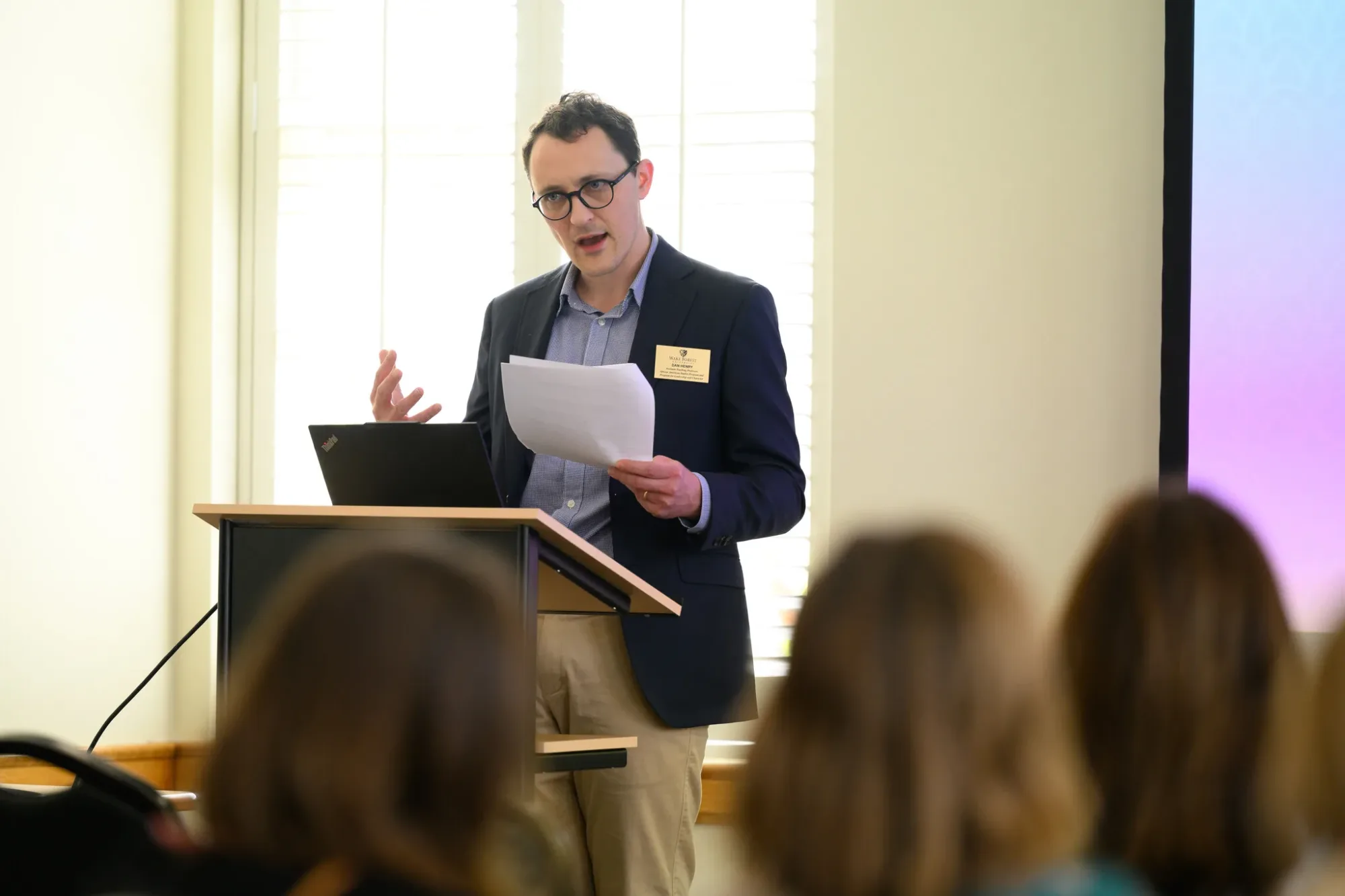
Hope is more than just wishing for something to get better. “It’s a catalyst for action,” says Daniel Henry, an assistant teaching professor in the Program for African American and African Studies and the Program for Leadership and Character. “Hope is something that allows us to act in common. It creates its own probability, when there is seemingly very little or even no possibility.”
A course led by Henry examines the question “What is hope for?” through the lens of Black thinkers’ social movements. This first-year seminar course, FYS 100: Collective Imagination and Political Hope, helps students to think about the ways hope can motivate us to take action and create a better society for everyone involved.
Throughout the semester, students explore how social movements like the Civil Rights Movement have displayed hope while imagining a better future. In addition, students examine the work of thinkers and activists such as Bernice Johnson Reagon, Edward McCabe, Daphne A. Brooks, and others who imagined possibilities for freedom in a society shaped by racial oppression. One of the first exercises that students complete in this class is creating a family tree. It’s not a biological family tree, but one that includes media, literature, and historical events, along with cultural and religious traditions that have influenced them. “It reminded me that everybody’s imagination is different, and the ways that we’ve all grown up has totally shaped the people that we are now,” says Malia Hunter (’30), a student in Henry’s class. “Imagination and creativity comes in all forms, and no one way of imagining how you view society is better than another.” The assignment also helped students to reflect on what they think is possible in the world and to recognize that their hopes are part of a larger collective story. “Hope that is shared between people allows them to create their own reality,” says Henry.
Henry hopes that students in his course will think about what it means to build a life that contributes to the well-being of others while keeping the university’s motto of Pro Humanitate in mind. “I hope that they are able to be reflective about the ways that they imagine a world together,” says Henry. “I hope that they can be intentional about that and understand how they can bring what they might imagine in line with what they also believe.”